
Reading Tables Final Quiz – Outschool
Reading Tables Final Quiz
Quiz Summary
0 of 9 Questions completed
Questions:
Information
You have already completed the quiz before. Hence you can not start it again.
Quiz is loading…
You must sign in or sign up to start the quiz.
You must first complete the following:
Results
Results
0 of 9 Questions answered correctly
Your time:
Time has elapsed
You have reached 0 of 0 point(s), (0)
Earned Point(s): 0 of 0, (0)
0 Essay(s) Pending (Possible Point(s): 0)
Categories
- Not categorized 0%
- 1
- 2
- 3
- 4
- 5
- 6
- 7
- 8
- 9
- Current
- Review
- Answered
- Correct
- Incorrect
-
Question 1 of 9
1. Question
The fatty acids of green coffee beans are some of the major components that determine coffee quality. A study was conducted to evaluate the effect of coffee plant altitude on the composition of fatty acids in the beans.
The main saturated fatty acid found in the green coffee beans was palmitic acid, and the main unsaturated fatty acid was linoleic acid. The other major constituents of fatty acids present were stearic (saturated) and oleic (unsaturated) acids.
There are many biological benefits to the fatty acids present in green coffee beans. For example, linoleic acid is often present in skin treatment products because of its role in biological processes related to cell regeneration. Similarly, high concentrations of palmitic acid provide good skin protection.
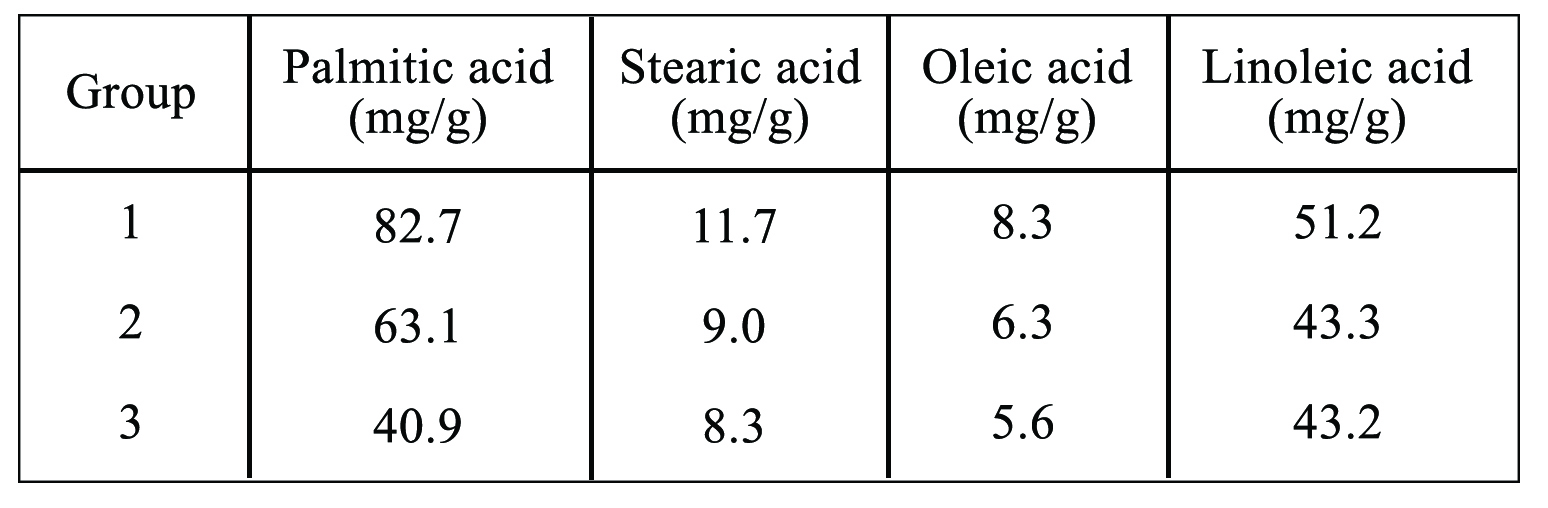
Green coffee beans were collected in nine regions that each fell into one of the following groups according to altitude in meters above sea level (masl): Group 1 (1500-1700m), Group 2 (1701-1900m) and Group 3 (>1900m). The concentrations in milligrams per gram (mg/g) of four main fatty acids from those collections were recorded in Table 1. The average concentration of each acid arranged by group is shown in Table 2.
Table 1
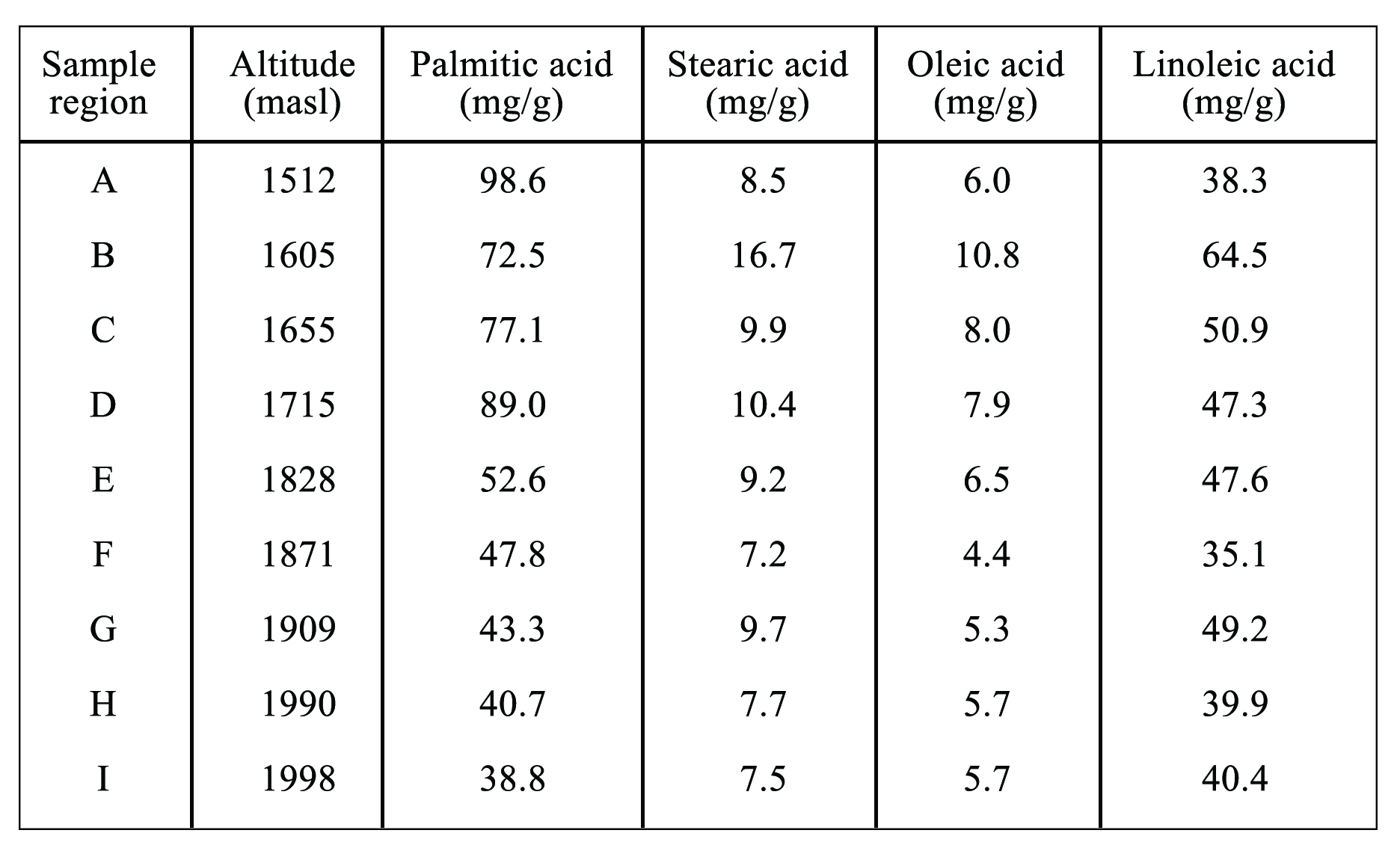
Table 2
According to Table 1, as the altitude in group 1 increased, the concentration of stearic acid in the green coffee beans:
CorrectIncorrectHint
Use the information in the passage to figure out which regions from Table 1 are in group 1.
-
Question 2 of 9
2. Question
The fatty acids of green coffee beans are some of the major components that determine coffee quality. A study was conducted to evaluate the effect of coffee plant altitude on the composition of fatty acids in the beans.
The main saturated fatty acid found in the green coffee beans was palmitic acid, and the main unsaturated fatty acid was linoleic acid. The other major constituents of fatty acids present were stearic (saturated) and oleic (unsaturated) acids.
There are many biological benefits to the fatty acids present in green coffee beans. For example, linoleic acid is often present in skin treatment products because of its role in biological processes related to cell regeneration. Similarly, high concentrations of palmitic acid provide good skin protection.
Green coffee beans were collected in nine regions that each fell into one of the following groups according to altitude in meters above sea level (masl): Group 1 (1500-1700m), Group 2 (1701-1900m) and Group 3 (>1900m). The concentrations in milligrams per gram (mg/g) of four main fatty acids from those collections were recorded in Table 1. The average concentration of each acid arranged by group is shown in Table 2.
Table 1
Table 2
According to Table 1, as the altitude in group 2 increased, the concentration of oleic acid in the green coffee beans:
CorrectIncorrectHint
Use the information in the passage to figure out which regions from Table 1 are in group 2.
-
Question 3 of 9
3. Question
The fatty acids of green coffee beans are some of the major components that determine coffee quality. A study was conducted to evaluate the effect of coffee plant altitude on the composition of fatty acids in the beans.
The main saturated fatty acid found in the green coffee beans was palmitic acid, and the main unsaturated fatty acid was linoleic acid. The other major constituents of fatty acids present were stearic (saturated) and oleic (unsaturated) acids.
There are many biological benefits to the fatty acids present in green coffee beans. For example, linoleic acid is often present in skin treatment products because of its role in biological processes related to cell regeneration. Similarly, high concentrations of palmitic acid provide good skin protection.
Green coffee beans were collected in nine regions that each fell into one of the following groups according to altitude in meters above sea level (masl): Group 1 (1500-1700m), Group 2 (1701-1900m) and Group 3 (>1900m). The concentrations in milligrams per gram (mg/g) of four main fatty acids from those collections were recorded in Table 1. The average concentration of each acid arranged by group is shown in Table 2.
Table 1
Table 2
Which sample region had the highest concentration of unsaturated fatty acids?
CorrectIncorrectHint
Use the information in the passage to identify the unsaturated fatty acids.
-
Question 4 of 9
4. Question
The fatty acids of green coffee beans are some of the major components that determine coffee quality. A study was conducted to evaluate the effect of coffee plant altitude on the composition of fatty acids in the beans.
The main saturated fatty acid found in the green coffee beans was palmitic acid, and the main unsaturated fatty acid was linoleic acid. The other major constituents of fatty acids present were stearic (saturated) and oleic (unsaturated) acids.
There are many biological benefits to the fatty acids present in green coffee beans. For example, linoleic acid is often present in skin treatment products because of its role in biological processes related to cell regeneration. Similarly, high concentrations of palmitic acid provide good skin protection.
Green coffee beans were collected in nine regions that each fell into one of the following groups according to altitude in meters above sea level (masl): Group 1 (1500-1700m), Group 2 (1701-1900m) and Group 3 (>1900m). The concentrations in milligrams per gram (mg/g) of four main fatty acids from those collections were recorded in Table 1. The average concentration of each acid arranged by group is shown in Table 2.
Table 1
Table 2
A sample of green coffee beans from an unknown altitude was found to have an oleic acid concentration of 5.1 mg/g and palmitic acid concentration of 39.4 mg/g. What range of altitudes are these coffee beans most likely from?
CorrectIncorrectHint
Compare the values given to those for palmitic acid and oleic acid in Table 2.
-
Question 5 of 9
5. Question
The fatty acids of green coffee beans are some of the major components that determine coffee quality. A study was conducted to evaluate the effect of coffee plant altitude on the composition of fatty acids in the beans.
The main saturated fatty acid found in the green coffee beans was palmitic acid, and the main unsaturated fatty acid was linoleic acid. The other major constituents of fatty acids present were stearic (saturated) and oleic (unsaturated) acids.
There are many biological benefits to the fatty acids present in green coffee beans. For example, linoleic acid is often present in skin treatment products because of its role in biological processes related to cell regeneration. Similarly, high concentrations of palmitic acid provide good skin protection.
Green coffee beans were collected in nine regions that each fell into one of the following groups according to altitude in meters above sea level (masl): Group 1 (1500-1700m), Group 2 (1701-1900m) and Group 3 (>1900m). The concentrations in milligrams per gram (mg/g) of four main fatty acids from those collections were recorded in Table 1. The average concentration of each acid arranged by group is shown in Table 2.
Table 1
Table 2
For a region at an altitude of 1801 meters above sea level, which of the following is a reasonable estimate of oleic acid concentration in milligrams per gram?
CorrectIncorrectHint
Use either Table 1 or Table 2 to find oleic acid concentrations at altitudes near 1801 masl.
-
Question 6 of 9
6. Question
The fatty acids of green coffee beans are some of the major components that determine coffee quality. A study was conducted to evaluate the effect of coffee plant altitude on the composition of fatty acids in the beans.
The main saturated fatty acid found in the green coffee beans was palmitic acid, and the main unsaturated fatty acid was linoleic acid. The other major constituents of fatty acids present were stearic (saturated) and oleic (unsaturated) acids.
There are many biological benefits to the fatty acids present in green coffee beans. For example, linoleic acid is often present in skin treatment products because of its role in biological processes related to cell regeneration. Similarly, high concentrations of palmitic acid provide good skin protection.
Green coffee beans were collected in nine regions that each fell into one of the following groups according to altitude in meters above sea level (masl): Group 1 (1500-1700m), Group 2 (1701-1900m) and Group 3 (>1900m). The concentrations in milligrams per gram (mg/g) of four main fatty acids from those collections were recorded in Table 1. The average concentration of each acid arranged by group is shown in Table 2.
Table 1
Table 2
The average concentration of palmitic acid for each of the three groups is best represented by which of the following graphs?
CorrectIncorrectHint
Table 2 shows the average concentration of palmitic acid in each of the three groups.
-
Question 7 of 9
7. Question
The fatty acids of green coffee beans are some of the major components that determine coffee quality. A study was conducted to evaluate the effect of coffee plant altitude on the composition of fatty acids in the beans.
The main saturated fatty acid found in the green coffee beans was palmitic acid, and the main unsaturated fatty acid was linoleic acid. The other major constituents of fatty acids present were stearic (saturated) and oleic (unsaturated) acids.
There are many biological benefits to the fatty acids present in green coffee beans. For example, linoleic acid is often present in skin treatment products because of its role in biological processes related to cell regeneration. Similarly, high concentrations of palmitic acid provide good skin protection.
Green coffee beans were collected in nine regions that each fell into one of the following groups according to altitude in meters above sea level (masl): Group 1 (1500-1700m), Group 2 (1701-1900m) and Group 3 (>1900m). The concentrations in milligrams per gram (mg/g) of four main fatty acids from those collections were recorded in Table 1. The average concentration of each acid arranged by group is shown in Table 2.
Table 1
Table 2
What can be concluded about the relationship between the presence of saturated and unsaturated fatty acids and altitude?
CorrectIncorrectHint
Table 2 can be used to identify the relationship between fatty acid concentration and altitude for all four fatty acids.
-
Question 8 of 9
8. Question
The fatty acids of green coffee beans are some of the major components that determine coffee quality. A study was conducted to evaluate the effect of coffee plant altitude on the composition of fatty acids in the beans.
The main saturated fatty acid found in the green coffee beans was palmitic acid, and the main unsaturated fatty acid was linoleic acid. The other major constituents of fatty acids present were stearic (saturated) and oleic (unsaturated) acids.
There are many biological benefits to the fatty acids present in green coffee beans. For example, linoleic acid is often present in skin treatment products because of its role in biological processes related to cell regeneration. Similarly, high concentrations of palmitic acid provide good skin protection.
Green coffee beans were collected in nine regions that each fell into one of the following groups according to altitude in meters above sea level (masl): Group 1 (1500-1700m), Group 2 (1701-1900m) and Group 3 (>1900m). The concentrations in milligrams per gram (mg/g) of four main fatty acids from those collections were recorded in Table 1. The average concentration of each acid arranged by group is shown in Table 2.
Table 1
Table 2
Based on the tables and the information presented in the passage, the green coffee beans at which of the following altitudes would provide the greatest skin protection?
CorrectIncorrectHint
Use the information in the passage to find the relationship between fatty acid concentration and skin protection.
-
Question 9 of 9
9. Question
The fatty acids of green coffee beans are some of the major components that determine coffee quality. A study was conducted to evaluate the effect of coffee plant altitude on the composition of fatty acids in the beans.
The main saturated fatty acid found in the green coffee beans was palmitic acid, and the main unsaturated fatty acid was linoleic acid. The other major constituents of fatty acids present were stearic (saturated) and oleic (unsaturated) acids.
There are many biological benefits to the fatty acids present in green coffee beans. For example, linoleic acid is often present in skin treatment products because of its role in biological processes related to cell regeneration. Similarly, high concentrations of palmitic acid provide good skin protection.
Green coffee beans were collected in nine regions that each fell into one of the following groups according to altitude in meters above sea level (masl): Group 1 (1500-1700m), Group 2 (1701-1900m) and Group 3 (>1900m). The concentrations in milligrams per gram (mg/g) of four main fatty acids from those collections were recorded in Table 1. The average concentration of each acid arranged by group is shown in Table 2.
Table 1
Table 2
Altitude appears to have the greatest impact on the concentration of which fatty acid?
CorrectIncorrectHint
Use Table 2 to find the fatty acid that changes the most with altitude.