
Reading Graphs Final Quiz – Outschool
Reading Graphs Final Quiz
Quiz Summary
0 of 6 Questions completed
Questions:
Information
You have already completed the quiz before. Hence you can not start it again.
Quiz is loading…
You must sign in or sign up to start the quiz.
You must first complete the following:
Results
Results
0 of 6 Questions answered correctly
Your time:
Time has elapsed
You have reached 0 of 0 point(s), (0)
Earned Point(s): 0 of 0, (0)
0 Essay(s) Pending (Possible Point(s): 0)
Categories
- Not categorized 0%
- 1
- 2
- 3
- 4
- 5
- 6
- Current
- Review
- Answered
- Correct
- Incorrect
-
Question 1 of 6
1. Question
Adsorption is the process by which atoms, ions, or molecules from a gas, liquid, or dissolved solid adhere to a surface. It can be used to extract a certain substance from a mixture. In this study, sulfamerazine (SMR) was adsorbed onto a polystyrene sulfonate sodium (PSS) magnetic material to evaluate the adsorption capacity of PSS for this application. This process is shown in the diagram below.
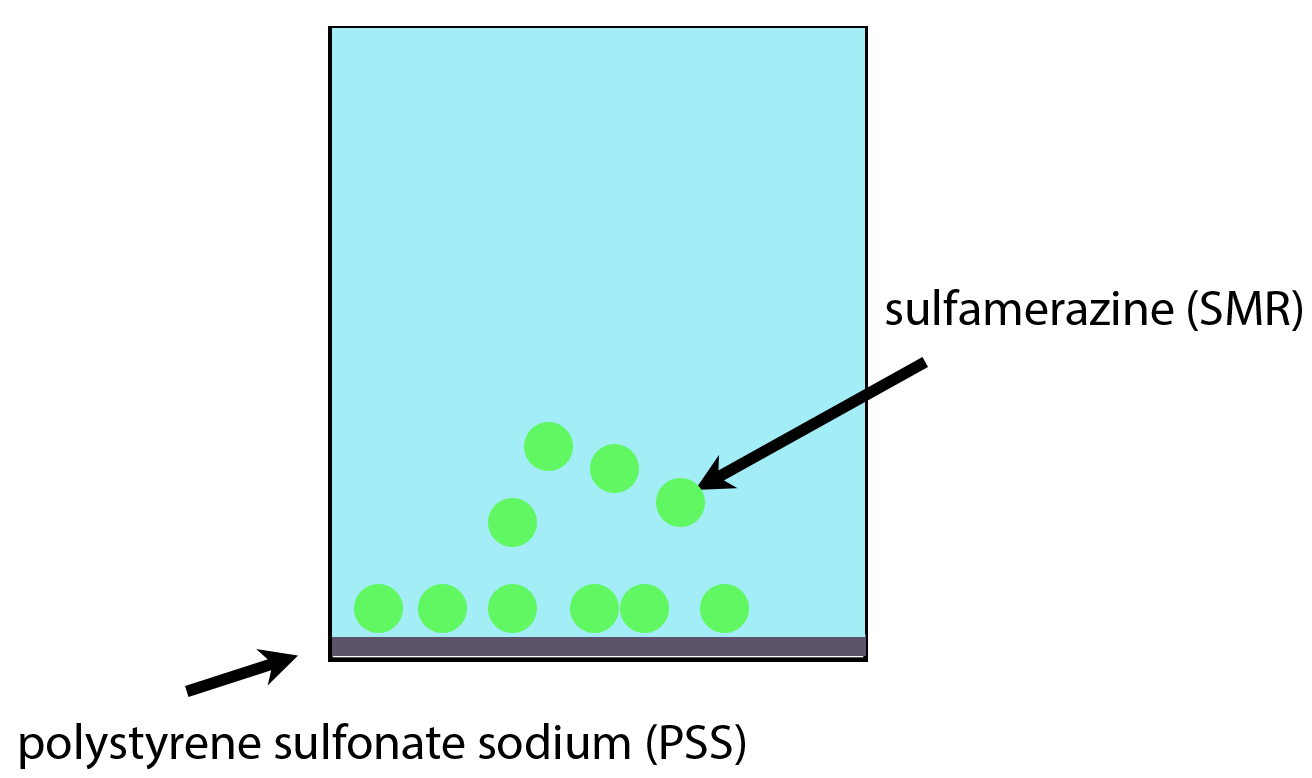
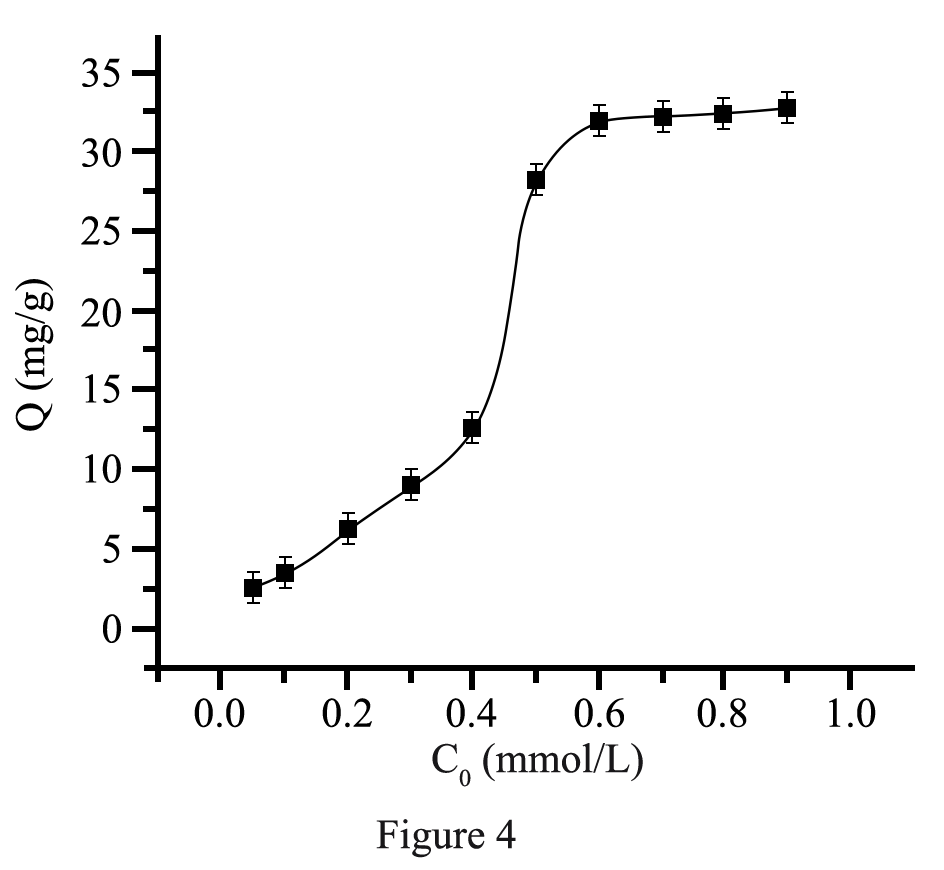
The effect of temperature, time, and pH on the amount adsorbed at an initial SMR concentration of 0.6 mmol/L was studied, and the results are shown in Figures 1-3. Figure 4 shows the effect of the initial concentration of SMR in solution on the amount adsorbed.
The amount of SMR adsorbed (Q) in mg/g was determined using the following equation:
[latex size=2]\Large {Q= \frac{(C_0-C_e)V}{m}}[/latex]
Where C0 and Ce are the initial and adsorption equilibrium concentrations of SMR, respectively (mmol/L), V is the solution volume (mL) and m is the mass (g) of the PSS magnetic material.
In the adsorption process, equilibrium is achieved when the amount of the adsorbate (SMR) in the fluid is equal to the amount adsorbed.
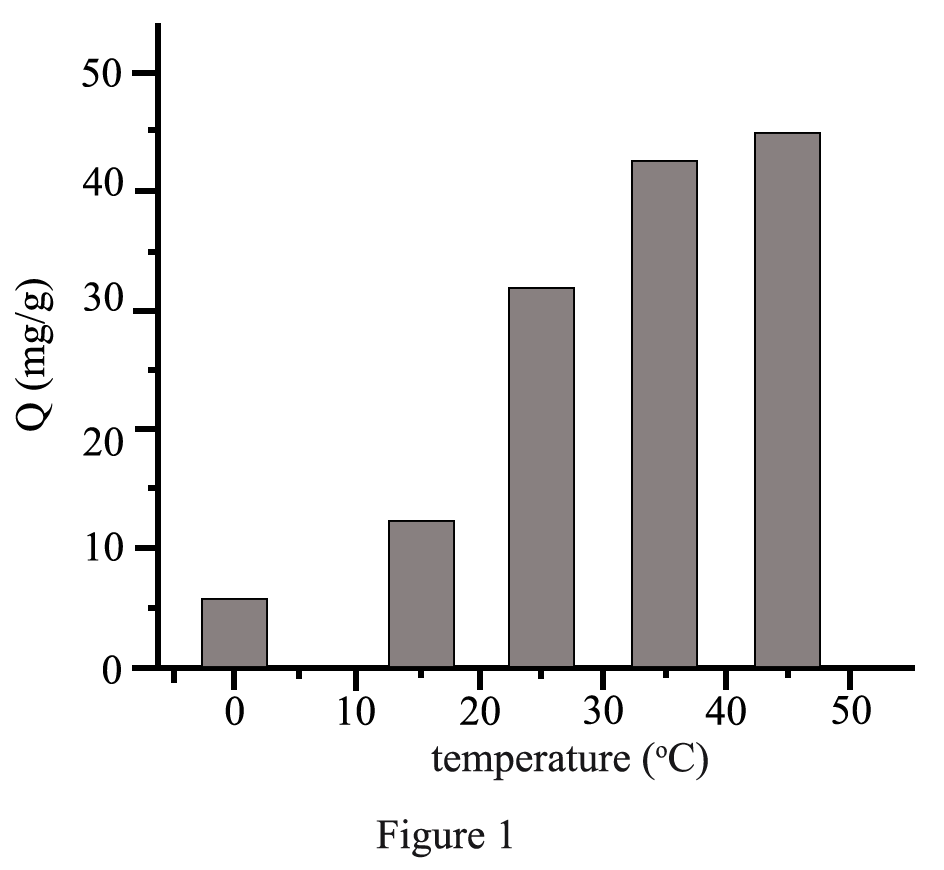
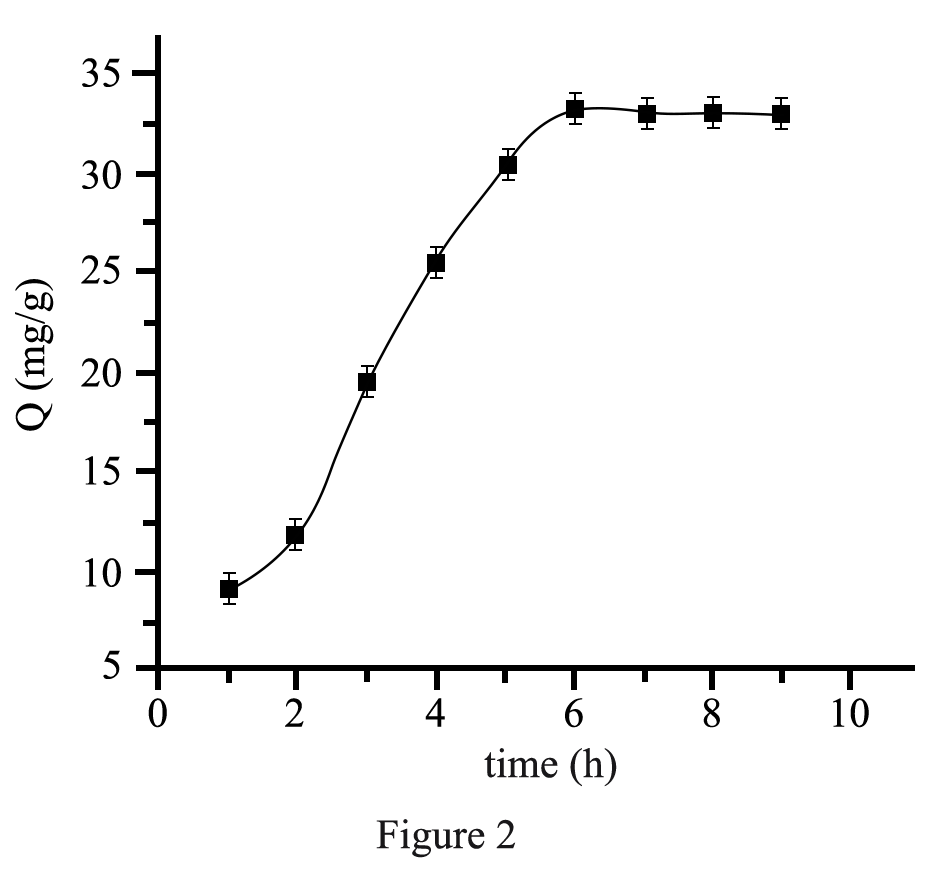
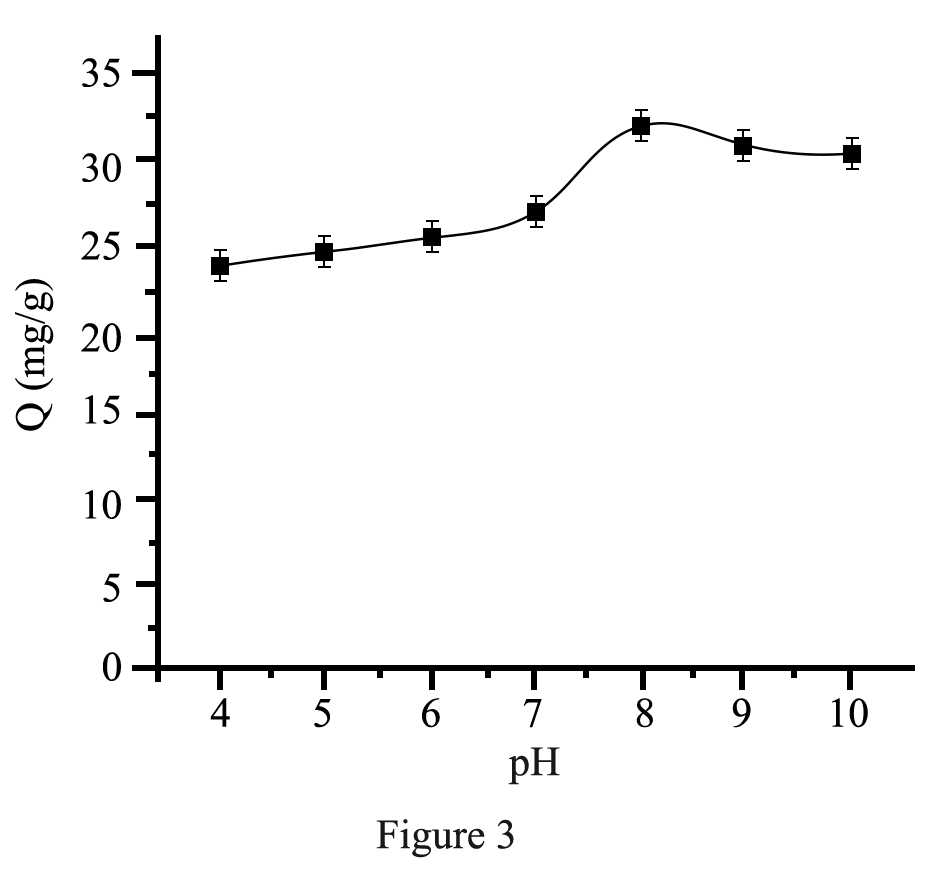
Figures adapted from Liu, Huachun et al. “Preparation of high-capacity magnetic polystyrene sulfonate sodium material based on SI-ATRP method and its adsorption property research for sulfonamide antibiotics.” BMC chemistry vol. 14,1 3. 14 Jan. 2020, doi:10.1186/s13065-019-0658-8
A reasonable estimate of the amount of SMR adsorbed at a temperature of 7oC is:
CorrectIncorrectHint
Locate the graph of amount adsorbed vs. temperature. Use the data at 0oC and 15oC, along with the overall trend of the graph to predict the amount adsorbed at 7oC.
-
Question 2 of 6
2. Question
Adsorption is the process by which atoms, ions, or molecules from a gas, liquid, or dissolved solid adhere to a surface. It can be used to extract a certain substance from a mixture. In this study, sulfamerazine (SMR) was adsorbed onto a polystyrene sulfonate sodium (PSS) magnetic material to evaluate the adsorption capacity of PSS for this application. This process is shown in the diagram below.
The effect of temperature, time, and pH on the amount adsorbed at an initial SMR concentration of 0.6 mmol/L was studied, and the results are shown in Figures 1-3. Figure 4 shows the effect of the initial concentration of SMR in solution on the amount adsorbed.
The amount of SMR adsorbed (Q) in mg/g was determined using the following equation:
[latex size=2]\Large {Q= \frac{(C_0-C_e)V}{m}}[/latex]
Where C0 and Ce are the initial and adsorption equilibrium concentrations of SMR, respectively (mmol/L), V is the solution volume (mL) and m is the mass (g) of the PSS magnetic material.
In the adsorption process, equilibrium is achieved when the amount of the adsorbate (SMR) in the fluid is equal to the amount adsorbed.
Figures adapted from Liu, Huachun et al. “Preparation of high-capacity magnetic polystyrene sulfonate sodium material based on SI-ATRP method and its adsorption property research for sulfonamide antibiotics.” BMC chemistry vol. 14,1 3. 14 Jan. 2020, doi:10.1186/s13065-019-0658-8
How long did it take 20 mg/g of 0.6 mmol/L SMR to be adsorbed by the PSS magnetic material?
CorrectIncorrectHint
Locate the graph of amount adsorbed vs. time. Start at 20mg/g on the vertical axis. Trace horizontally from this point to the curve, then down to the horizontal axis to find the time.
-
Question 3 of 6
3. Question
Adsorption is the process by which atoms, ions, or molecules from a gas, liquid, or dissolved solid adhere to a surface. It can be used to extract a certain substance from a mixture. In this study, sulfamerazine (SMR) was adsorbed onto a polystyrene sulfonate sodium (PSS) magnetic material to evaluate the adsorption capacity of PSS for this application. This process is shown in the diagram below.
The effect of temperature, time, and pH on the amount adsorbed at an initial SMR concentration of 0.6 mmol/L was studied, and the results are shown in Figures 1-3. Figure 4 shows the effect of the initial concentration of SMR in solution on the amount adsorbed.
The amount of SMR adsorbed (Q) in mg/g was determined using the following equation:
[latex size=2]\Large {Q= \frac{(C_0-C_e)V}{m}}[/latex]
Where C0 and Ce are the initial and adsorption equilibrium concentrations of SMR, respectively (mmol/L), V is the solution volume (mL) and m is the mass (g) of the PSS magnetic material.
In the adsorption process, equilibrium is achieved when the amount of the adsorbate (SMR) in the fluid is equal to the amount adsorbed.
Figures adapted from Liu, Huachun et al. “Preparation of high-capacity magnetic polystyrene sulfonate sodium material based on SI-ATRP method and its adsorption property research for sulfonamide antibiotics.” BMC chemistry vol. 14,1 3. 14 Jan. 2020, doi:10.1186/s13065-019-0658-8
The adsorption amount is considered saturated when the amount adsorbed no longer changes with increasing initial SMR concentration. If the optimal initial SMR concentration occurs right when the adsorption amount becomes saturated, what is the optimal initial SMR concentration in this experiment?
CorrectIncorrectHint
Find the graph that compares initial SMR concentration and amount adsorbed. Find the point where the graph stops increasing and starts to flatten.
-
Question 4 of 6
4. Question
Adsorption is the process by which atoms, ions, or molecules from a gas, liquid, or dissolved solid adhere to a surface. It can be used to extract a certain substance from a mixture. In this study, sulfamerazine (SMR) was adsorbed onto a polystyrene sulfonate sodium (PSS) magnetic material to evaluate the adsorption capacity of PSS for this application. This process is shown in the diagram below.
The effect of temperature, time, and pH on the amount adsorbed at an initial SMR concentration of 0.6 mmol/L was studied, and the results are shown in Figures 1-3. Figure 4 shows the effect of the initial concentration of SMR in solution on the amount adsorbed.
The amount of SMR adsorbed (Q) in mg/g was determined using the following equation:
[latex size=2]\Large {Q= \frac{(C_0-C_e)V}{m}}[/latex]
Where C0 and Ce are the initial and adsorption equilibrium concentrations of SMR, respectively (mmol/L), V is the solution volume (mL) and m is the mass (g) of the PSS magnetic material.
In the adsorption process, equilibrium is achieved when the amount of the adsorbate (SMR) in the fluid is equal to the amount adsorbed.
Figures adapted from Liu, Huachun et al. “Preparation of high-capacity magnetic polystyrene sulfonate sodium material based on SI-ATRP method and its adsorption property research for sulfonamide antibiotics.” BMC chemistry vol. 14,1 3. 14 Jan. 2020, doi:10.1186/s13065-019-0658-8
According to Figure 2, during which time interval was the SMR most rapidly adsorbed?
CorrectIncorrectHint
The steeper the slope, the faster the adsorption rate.
-
Question 5 of 6
5. Question
Adsorption is the process by which atoms, ions, or molecules from a gas, liquid, or dissolved solid adhere to a surface. It can be used to extract a certain substance from a mixture. In this study, sulfamerazine (SMR) was adsorbed onto a polystyrene sulfonate sodium (PSS) magnetic material to evaluate the adsorption capacity of PSS for this application. This process is shown in the diagram below.
The effect of temperature, time, and pH on the amount adsorbed at an initial SMR concentration of 0.6 mmol/L was studied, and the results are shown in Figures 1-3. Figure 4 shows the effect of the initial concentration of SMR in solution on the amount adsorbed.
The amount of SMR adsorbed (Q) in mg/g was determined using the following equation:
[latex size=2]\Large {Q= \frac{(C_0-C_e)V}{m}}[/latex]
Where C0 and Ce are the initial and adsorption equilibrium concentrations of SMR, respectively (mmol/L), V is the solution volume (mL) and m is the mass (g) of the PSS magnetic material.
In the adsorption process, equilibrium is achieved when the amount of the adsorbate (SMR) in the fluid is equal to the amount adsorbed.
Figures adapted from Liu, Huachun et al. “Preparation of high-capacity magnetic polystyrene sulfonate sodium material based on SI-ATRP method and its adsorption property research for sulfonamide antibiotics.” BMC chemistry vol. 14,1 3. 14 Jan. 2020, doi:10.1186/s13065-019-0658-8
An adsorption process is endothermic if the adsorption amount increases with increasing temperature, and is exothermic if the adsorption amount increases with decreasing temperature. The adsorption of SMR onto PSS is:
CorrectIncorrectHint
Locate the graph of amount adsorbed vs. temperature. Identify the overall trend of the graph as you move from left to right (i.e. as temperature increases).
-
Question 6 of 6
6. Question
Adsorption is the process by which atoms, ions, or molecules from a gas, liquid, or dissolved solid adhere to a surface. It can be used to extract a certain substance from a mixture. In this study, sulfamerazine (SMR) was adsorbed onto a polystyrene sulfonate sodium (PSS) magnetic material to evaluate the adsorption capacity of PSS for this application. This process is shown in the diagram below.
The effect of temperature, time, and pH on the amount adsorbed at an initial SMR concentration of 0.6 mmol/L was studied, and the results are shown in Figures 1-3. Figure 4 shows the effect of the initial concentration of SMR in solution on the amount adsorbed.
The amount of SMR adsorbed (Q) in mg/g was determined using the following equation:
[latex size=2]\Large {Q= \frac{(C_0-C_e)V}{m}}[/latex]
Where C0 and Ce are the initial and adsorption equilibrium concentrations of SMR, respectively (mmol/L), V is the solution volume (mL) and m is the mass (g) of the PSS magnetic material.
In the adsorption process, equilibrium is achieved when the amount of the adsorbate (SMR) in the fluid is equal to the amount adsorbed.
Figures adapted from Liu, Huachun et al. “Preparation of high-capacity magnetic polystyrene sulfonate sodium material based on SI-ATRP method and its adsorption property research for sulfonamide antibiotics.” BMC chemistry vol. 14,1 3. 14 Jan. 2020, doi:10.1186/s13065-019-0658-8
Which of the following parameters had the least significant impact on the amount of SMR adsorbed?
CorrectIncorrectHint
On the graphs, a steeper slope indicates a bigger change in the amount adsorbed.