
ACT Science Final Quiz 2 – Outschool
ACT Science Final Quiz 2
You will be given 7 minutes to complete this 7-question science passage. Good luck!
Quiz Summary
0 of 7 Questions completed
Questions:
Information
You have already completed the quiz before. Hence you can not start it again.
Quiz is loading…
You must sign in or sign up to start the quiz.
You must first complete the following:
Results
Results
0 of 7 Questions answered correctly
Your time:
Time has elapsed
You have reached 0 of 0 point(s), (0)
Earned Point(s): 0 of 0, (0)
0 Essay(s) Pending (Possible Point(s): 0)
Categories
- Not categorized 0%
- 1
- 2
- 3
- 4
- 5
- 6
- 7
- Current
- Review / Skip
- Answered
- Correct
- Incorrect
-
Question 1 of 7
1. Question
In 2 experiments, students rolled marbles down inclined plane surfaces.
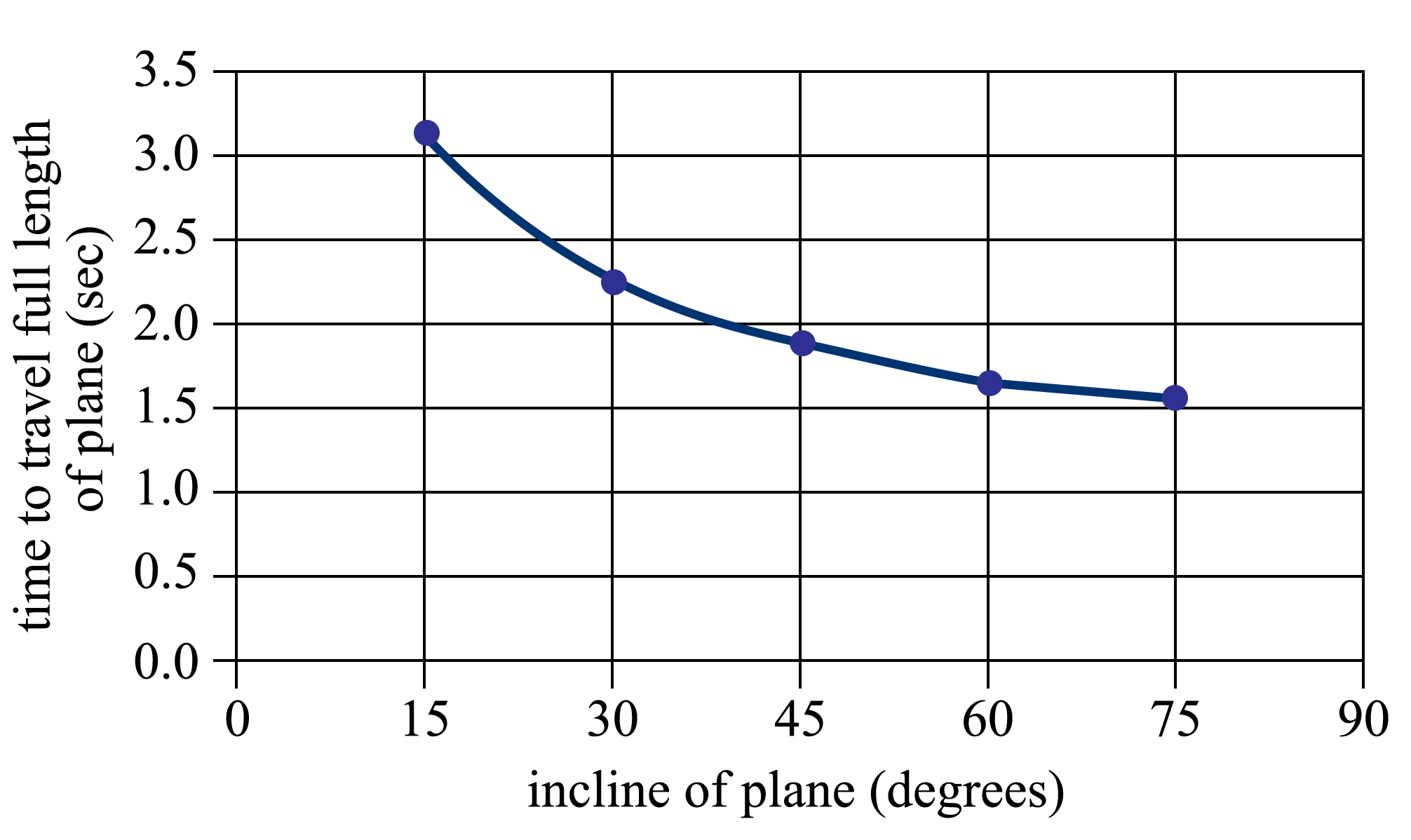
In Experiment 1, the students measured the time it took for the marbles to travel the full length of the plane surface, 20 feet, at 5 different degrees of incline. The results are shown in Figure 1 below:
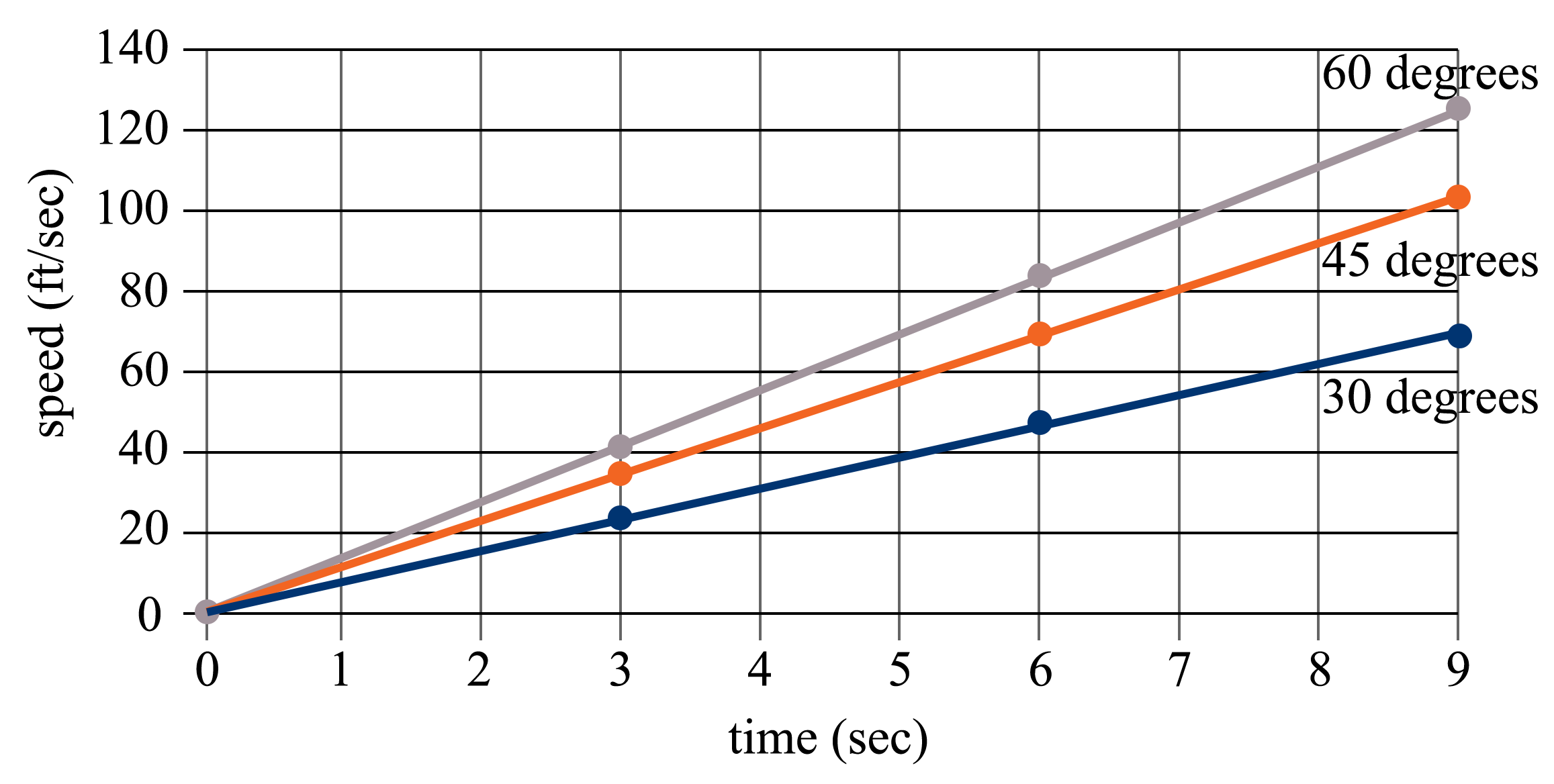
In Experiment 2, students rolled marbles down planes of varying degrees of incline and estimated the speeds of marbles at different times. Those results on shown in Figure 2 below:
Based on the results of Experiment 1 as shown in Figure 1, you would expect a marble placed on an 80 degree incline and released would take approximately how long to travel 20 feet?
CorrectIncorrectHint
Step 1: Use the graph from Figure 1.
Step 2: Extend the graph out to the 80 degree incline.
-
Question 2 of 7
2. Question
In 2 experiments, students rolled marbles down inclined plane surfaces.
In Experiment 1, the students measured the time it took for the marbles to travel the full length of the plane surface, 20 feet, at 5 different degrees of incline. The results are shown in Figure 1 below:
In Experiment 2, students rolled marbles down planes of varying degrees of incline and estimated the speeds of marbles at different times. Those results on shown in Figure 2 below:
Based on Figure 2, the speed of the marble that rolled down the 60 degree incline is best modeled by which of the following equations?
CorrectIncorrectHint
Find the slope of the 60 degree incline line using m = rise/run.
-
Question 3 of 7
3. Question
In 2 experiments, students rolled marbles down inclined plane surfaces.
In Experiment 1, the students measured the time it took for the marbles to travel the full length of the plane surface, 20 feet, at 5 different degrees of incline. The results are shown in Figure 1 below:
In Experiment 2, students rolled marbles down planes of varying degrees of incline and estimated the speeds of marbles at different times. Those results on shown in Figure 2 below:
Average speed is defined as change in distance divided by change in time. Based on the results of Experiment 1, which of the following is the best estimate of the average speed of the marble that rolled down the 15 degree inclined plane?
CorrectIncorrectHint
From the text, you know the marble rolled 20 feet.
Use Figure 1 to determine how long it took the marble to travel the 20 feet.
-
Question 4 of 7
4. Question
In 2 experiments, students rolled marbles down inclined plane surfaces.
In Experiment 1, the students measured the time it took for the marbles to travel the full length of the plane surface, 20 feet, at 5 different degrees of incline. The results are shown in Figure 1 below:
In Experiment 2, students rolled marbles down planes of varying degrees of incline and estimated the speeds of marbles at different times. Those results on shown in Figure 2 below:
In Experiment 1, the difference between the times it took to travel the full length of the plane is greatest between which two inclines?
CorrectIncorrectHint
Find the greatest decrease in time as recorded in Figure 1.
-
Question 5 of 7
5. Question
In 2 experiments, students rolled marbles down inclined plane surfaces.
In Experiment 1, the students measured the time it took for the marbles to travel the full length of the plane surface, 20 feet, at 5 different degrees of incline. The results are shown in Figure 1 below:
In Experiment 2, students rolled marbles down planes of varying degrees of incline and estimated the speeds of marbles at different times. Those results on shown in Figure 2 below:
Based on Figure 1, a student who wanted a marble to take 2.5 seconds to travel 20 feet down a plane would need to incline the plane to which of the following?
CorrectIncorrectHint
Use Figure 1 to estimate the incline needed to make the travel time 2.5 seconds.
Start at 2.5 seconds on the vertical axis…
-
Question 6 of 7
6. Question
In 2 experiments, students rolled marbles down inclined plane surfaces.
In Experiment 1, the students measured the time it took for the marbles to travel the full length of the plane surface, 20 feet, at 5 different degrees of incline. The results are shown in Figure 1 below:
In Experiment 2, students rolled marbles down planes of varying degrees of incline and estimated the speeds of marbles at different times. Those results on shown in Figure 2 below:
A student is tasked with estimating the speed at which the marble that rolled down the 20 foot, 60 degree incline exited. Which of the following is the best estimate of that speed?
CorrectIncorrectHint
Some of the most difficult ACT science items will require you to use multiple graphs to answer a single item.
-
Question 7 of 7
7. Question
In 2 experiments, students rolled marbles down inclined plane surfaces.
In Experiment 1, the students measured the time it took for the marbles to travel the full length of the plane surface, 20 feet, at 5 different degrees of incline. The results are shown in Figure 1 below:
In Experiment 2, students rolled marbles down planes of varying degrees of incline and estimated the speeds of marbles at different times. Those results on shown in Figure 2 below:
Which of the following was the dependent variable in Study 1?
CorrectIncorrectHint
Dependent variables are measured to determine the effect of the independent variable. Dependent variables “depend” on independent variables and are usually displayed on the vertical axis.